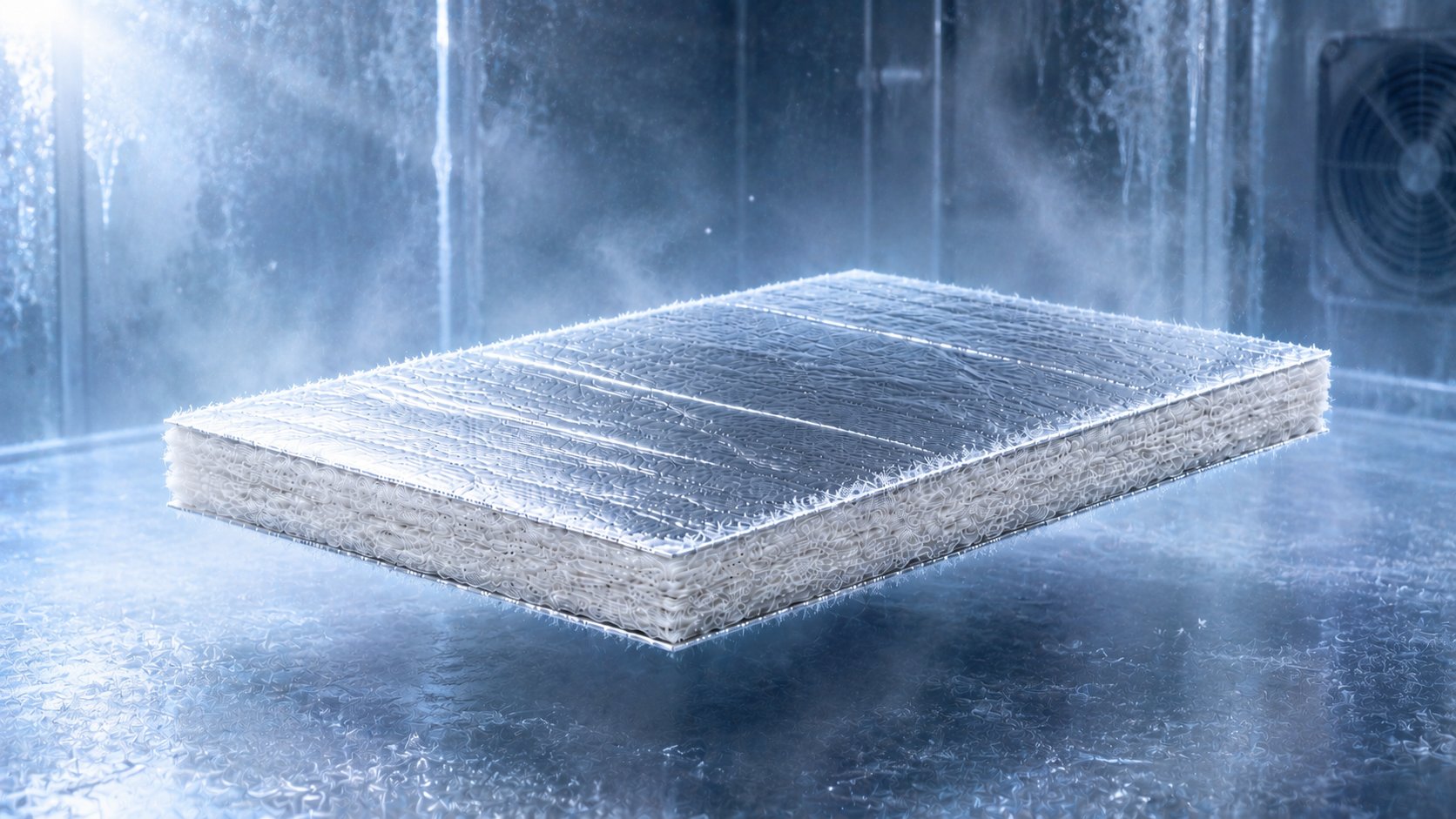
面向LNG及深冷工业系统开发,在极低温环境下保持较低导热系数,并通过柔性纳米保冷材料与低透湿阻汽结构的组合,兼顾深冷绝热、水汽控制及复杂结构施工需求。
Designed for LNG and cryogenic industrial systems, maintaining low thermal conductivity in extreme cold while combining flexible nanoporous insulation with a low-permeability vapor barrier for deep-cold thermal insulation, moisture control, and complex-structure installation.
LNG及深冷系统长期处于较大的内外温差和水蒸气分压力差环境中。除降低环境热量向低温介质传递外,控制水汽向低温侧迁移、保持阻汽结构连续性以及维持保冷系统完整性,同样关系到系统长期运行可靠性。
CIM4196/6196面向最低-196℃深冷工况开发,将低温绝热性能、低透湿阻汽结构与柔性材料特性结合,满足LNG及复杂深冷设备、管道的保冷需求。
LNG and cryogenic systems operate under large temperature differentials and vapor-pressure gradients. Beyond reducing heat transfer from the environment, controlling moisture migration toward the cold side, maintaining vapor-barrier continuity, and preserving system integrity are equally critical to long-term reliability.
CIM4196/6196 is designed for deep-cold conditions down to -196℃, combining low-temperature thermal performance, low-permeability vapor-barrier structure, and flexible material characteristics to meet the cold insulation needs of LNG and complex cryogenic equipment and piping.
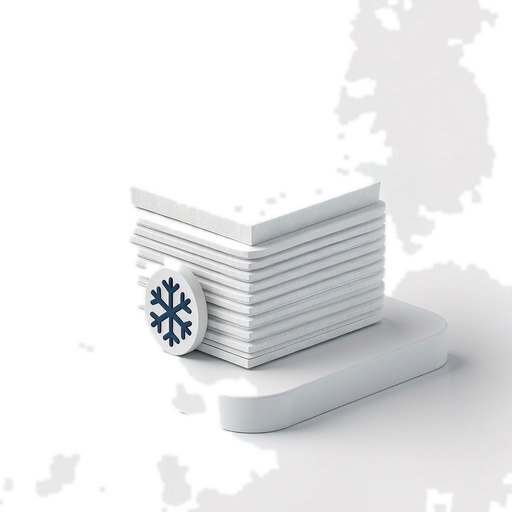
纳米孔结构降低材料内部热量传递,在深冷温区保持较低导热系数,为LNG及深冷工业系统提供高效绝热基础。
Nanoporous structure reduces internal heat transfer, maintaining low conductivity in the cryogenic range for efficient insulation in LNG and deep-cold industrial systems.
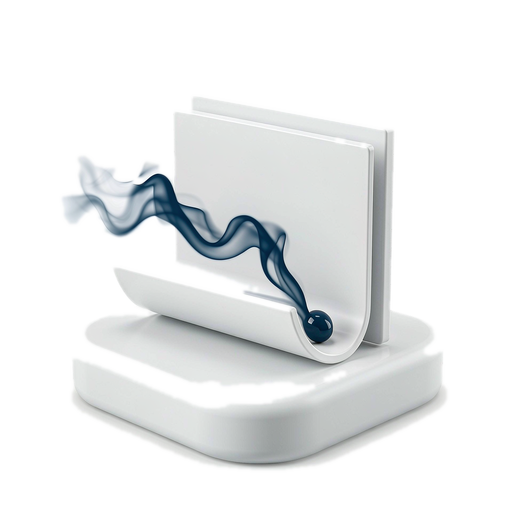
深冷系统内外较大的温差和水蒸气分压力差,使环境水汽具有持续向低温侧迁移的趋势。通过低透湿阻汽结构及连续密封设计,可减少水汽进入保冷系统后发生冷凝、结冰及绝热性能下降的风险。
Large temperature and vapor-pressure differentials drive sustained moisture migration toward the cryogenic side. Low-permeability vapor barriers and continuous sealing reduce condensation, icing, and performance degradation within the insulation system.
柔性材料可根据深冷管道、弯头、阀门、法兰及复杂异形结构进行裁切与贴合,提高复杂节点的施工适应性。
Flexible material can be cut and fitted to cryogenic pipes, elbows, valves, flanges, and complex geometries, improving installation adaptability at difficult nodes.
较高的抗拉强度与压缩回弹性能,使材料在运输、安装及长期运行过程中保持良好的结构完整性。
High tensile strength and compression recovery maintain structural integrity during transport, installation, and long-term operation.
适用于LNG、石油化工、空分、深冷分离等严苛低温行业
Suitable for LNG, petrochemical, air separation, cryogenic separation, and other demanding low-temperature industries
较低的低温导热系数可在满足项目保冷要求的前提下,为降低保冷系统设计厚度提供条件。具体保冷厚度应根据介质温度、管径、环境温湿度、允许冷损及表面温度要求等工况参数计算确定。
Lower low-temperature conductivity can reduce insulation system design thickness while meeting project cold-insulation requirements. Actual thickness must be calculated based on medium temperature, pipe diameter, ambient temperature/humidity, allowable cold loss, and surface temperature requirements.
以上数据为具体工程应用结果。不同项目工况及设计要求不同,具体保冷厚度应根据项目参数计算确定。
The above data represents specific engineering results. Different project conditions and design requirements will yield different results; actual insulation thickness must be calculated based on project parameters.
深冷系统运行过程中,环境水汽具有向低温侧迁移的趋势。一旦阻汽系统的连续性受到破坏,水汽进入保冷结构后可能发生冷凝甚至结冰,并进一步影响保冷系统的绝热性能和长期稳定性。
因此,深冷保冷不能只关注材料导热系数,还需要将保冷材料、阻汽层、接缝密封及外护系统作为完整结构进行设计和施工。
During operation, ambient moisture migrates toward the cold side. If vapor-barrier continuity is compromised, moisture entering the insulation may condense or freeze, further degrading thermal performance and long-term stability.
Therefore, cryogenic insulation cannot focus solely on material conductivity — the insulation, vapor barrier, joint sealing, and jacketing must be designed and constructed as an integrated system.
降低环境热量向低温介质传递。
Reduce heat transfer from ambient to cold medium.
控制环境水汽向低温侧迁移。
Control moisture migration toward the cold side.
保护保冷及阻汽结构,维持系统完整性。
Protect insulation and vapor barrier, maintain system integrity.
对于符合施工条件的运行低温管线,CIM柔性保冷体系可用于局部保冷修复,为结露、结霜及局部保冷失效区域提供运行状态下的修复方案。
For in-service low-temperature pipelines meeting construction conditions, the CIM flexible cold insulation system can be used for localized cold insulation repair — providing a remediation solution for condensation, frost, and local insulation failure areas while the line remains in operation.
适应低温管道、弯头、阀门及复杂异形结构。
Conforms to cryogenic pipes, elbows, valves, and complex geometries.
针对失效区域进行处理,减少不必要的大面积拆除。
Targeted treatment of failed areas, minimizing unnecessary large-scale removal.
针对符合施工条件的运行低温管线,可实施保冷修复。
Applicable to in-service low-temp pipelines meeting construction conditions.
| 导热系数(-160℃) | Thermal Conductivity (-160℃) | ≤0.010 W/(m·K) |
| 导热系数(0℃) | Thermal Conductivity (0℃) | ≤0.024 W/(m·K) |
| 最低使用温度 | Min Service Temperature | -196℃ |
| 使用温度范围 | Service Temperature Range | -196℃ ~ +80℃ |
| 材料整体憎水率 | Hydrophobicity (Overall Material) | ≥99.0% |
| 芯材类型 | Core Type | 可选(非憎水型 / 憎水型)Optional (Non-Hydrophobic / Hydrophobic) |
| 密度 | Density | 129 kg/m³ |
| 抗拉强度 | Tensile Strength | ≥100 kPa |
| 压缩回弹率 | Compression Recovery | 95%(100 kPa, 5 min) |
| 透湿率(整体) | Moisture Permeability | 1.3×10⁻⁸ g/(m²·s·Pa) |
| 燃烧性能 | Fire Performance | A1级 |
根据您的低温工况温度和性能需求,选择最适合的产品型号
Select the model that best fits your low-temperature and performance requirements